 Martin MawutNovember 30, 2025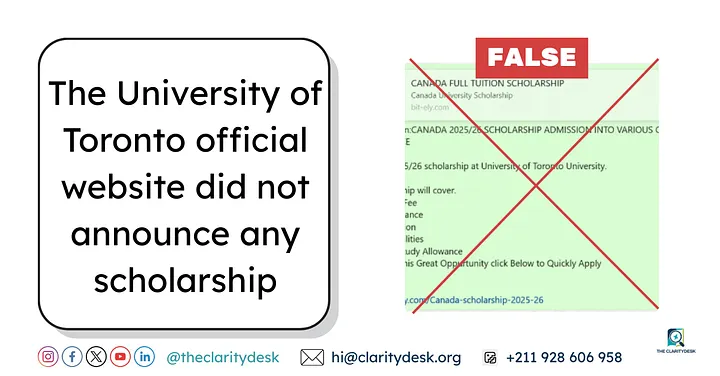
A viral post making rounds on WhatsApp claiming the University of Toronto, Canada, is offering a fully funded scholarship for 2025/2026 covering tuition, accommodation, living allowance, travel, and medical care, which carries a suspicious link, is false.
“It’s here again: Canada 2025/26 scholarship admission into various courses of your choice,” reads the viral WhatsApp claim shared widely on various groups.

Debunking the Claim:
Upon opening the link attached to the claim, which is embedded on Bitly, it shows a single photo of the University of Toronto building and displays a large countdown timer, an element not used on any legitimate university page, and the entire layout appeared different from the official site, which features a well-structured navigation bar, official icons such as website tabs and campus status, and professionally organised content. The fake page has no navigation links, no footer, no academic information, and does not resemble the university’s verified online design.
On clicking the form further, it will command the user to fill in the personal information, after which it asks the user to share the form with friends to have access to the visa form. This is always a trick scammers use to reach a lot of people.


The page also asks for personal information, including their full name, email, and, most alarmingly, their password, something which no legitimate scholarship, including the University of Toronto, would ever ask for. While real scholarships ask for academic documents and personal details through a secure university portal, the page does not have any online form that asks for documents, just a full name, course, phone number, email, and password.

Our Verdict:
The ClarityDesk has found the claim making rounds on the closed platform of WhatsApp to be false, intended to collect people’s information and is not connected to the University of Toronto, which shows a clear sign of a phishing scam. It uses deceptive branding, a fake countdown timer, and an unverified scholarship name to mislead users, and it even asks for highly sensitive information, such as a password, which no legitimate scholarship would ever request. The evidence shows that this page is designed to steal personal information and is actively promoting a form of phishing, not a genuine academic opportunity.
Have you spotted an error in this article and would like to request a correction, or have you come across a claim that we should investigate? Please send us an email to editor@claritydesk.org or click here to contact us via WhatsApp at +211 928 606 958.