 Dhel Malith CholApril 8, 2026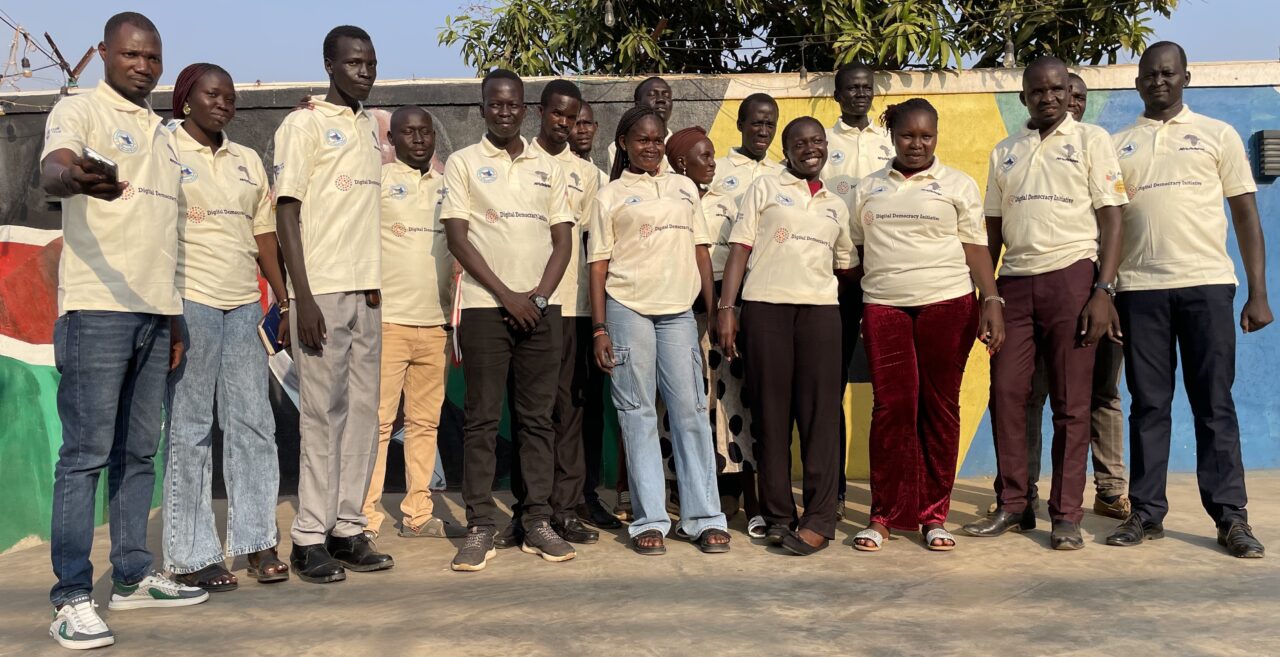
According to a report by The Sentinel Project, misinformation and disinformation has become one of the most persistent threats to public trust and social stability in South Sudan. False claims spread rapidly on Facebook, WhatsApp groups, and TikTok, often triggering panic, damaging reputations, and sometimes inflaming ethnic or political tensions.
One recent example involved a false claim circulating on Facebook that Jonglei State Governor, Riek Gai Kok, had died in Nairobi. The post, shared by a Facebook page under the headline “BREAKING NEWS,” alleged that the governor was “rumoured to have passed on.” Within hours, the claim began spreading widely online, attracting more than 100 reactions and numerous condolence messages from concerned social media users.
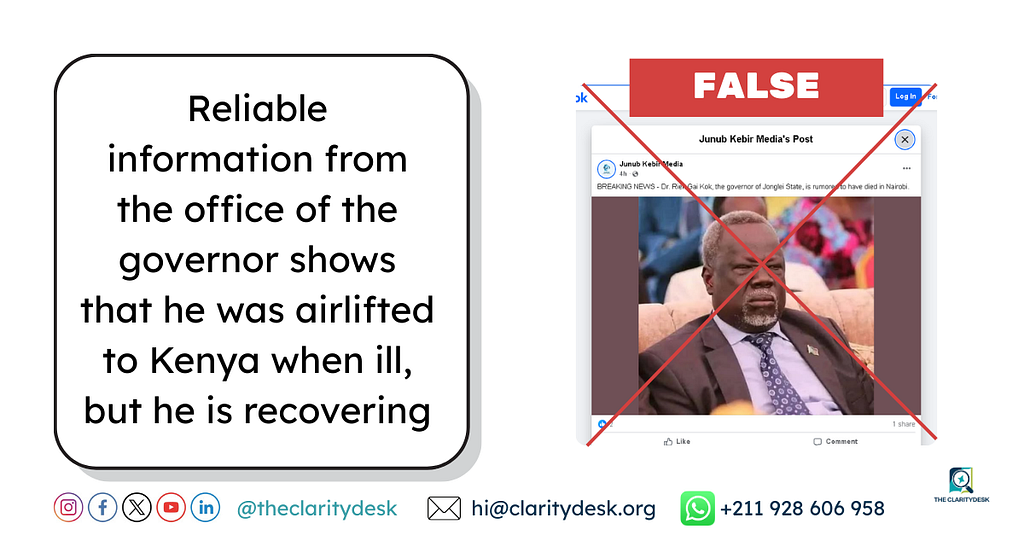
However, a group of Young Journalists Media Integrity Fellows supported by The Clarity Desk quickly investigated the claim. By verifying information with reliable sources and checking updates from the governor’s office, the fact-checkers established that the report was false. Official information confirmed that Governor Riek Gai Kok had been airlifted to Kenya for medical treatment and was recovering. Their fact-check helped stop the spread of the misinformation and reassured the public that the governor was alive.
This kind of rapid response is becoming more common thanks to a growing network of community fact-checkers working to protect South Sudan’s fragile information space.
A Grassroots Response to a Growing Problem
South Sudan has experienced a dramatic increase in internet and smartphone use over the last decade. As connectivity improves, social media has become a primary source of news for many citizens. But the rapid spread of information online has also created fertile ground for misinformation.
Recognizing this challenge, a number of civil society organizations and media groups like The ClarityDesk and Digital Rights Frontlines under their 211 Check Project have begun training community fact-checkers, young journalists, digital rights advocates, and civic volunteers to verify viral claims before they cause harm.
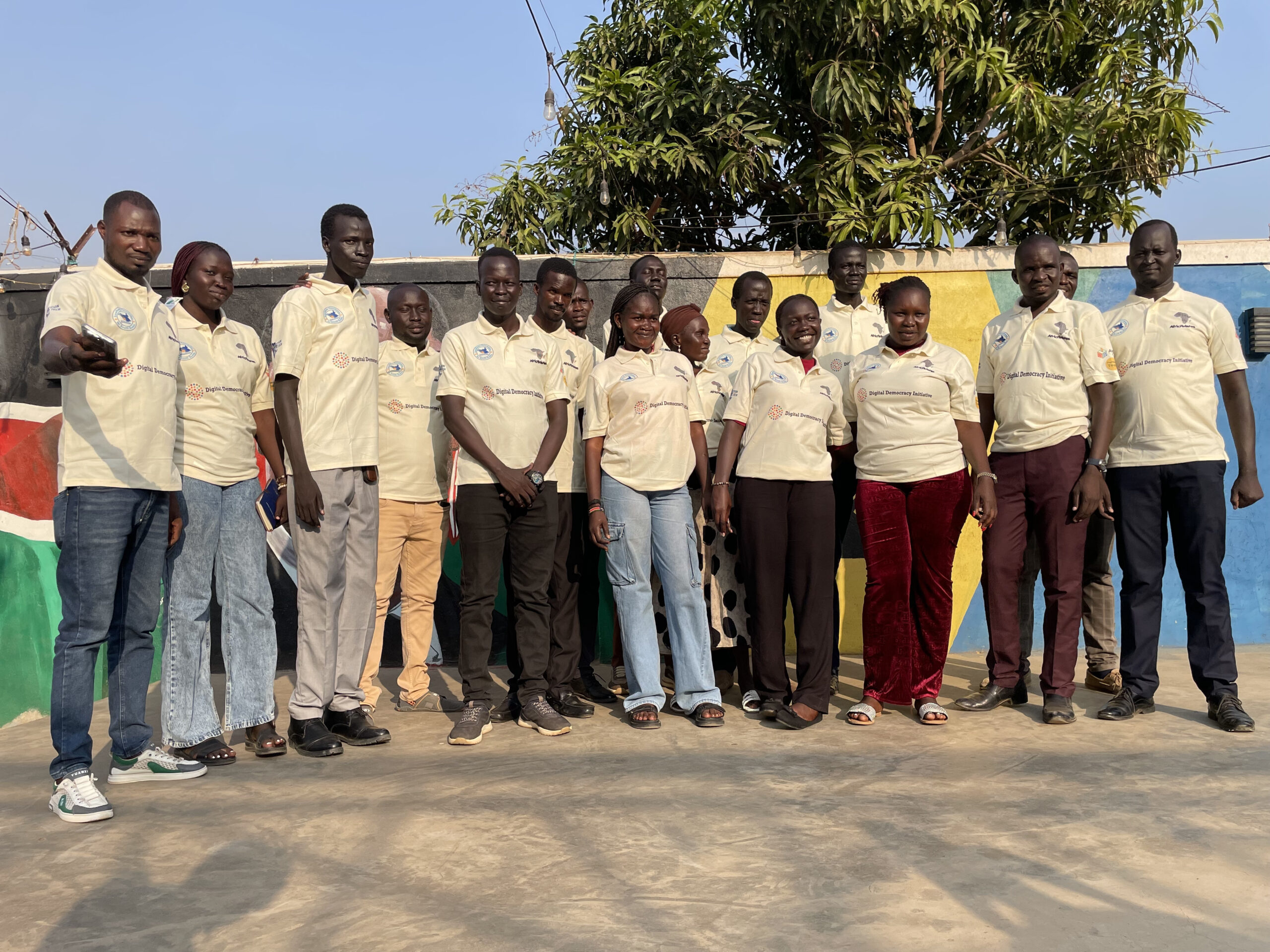
These fact-checkers monitor trending posts, investigate suspicious claims, and publish corrections in accessible language. Their work often involves contacting eyewitnesses, checking official records, analyzing images, and using open-source verification tools.
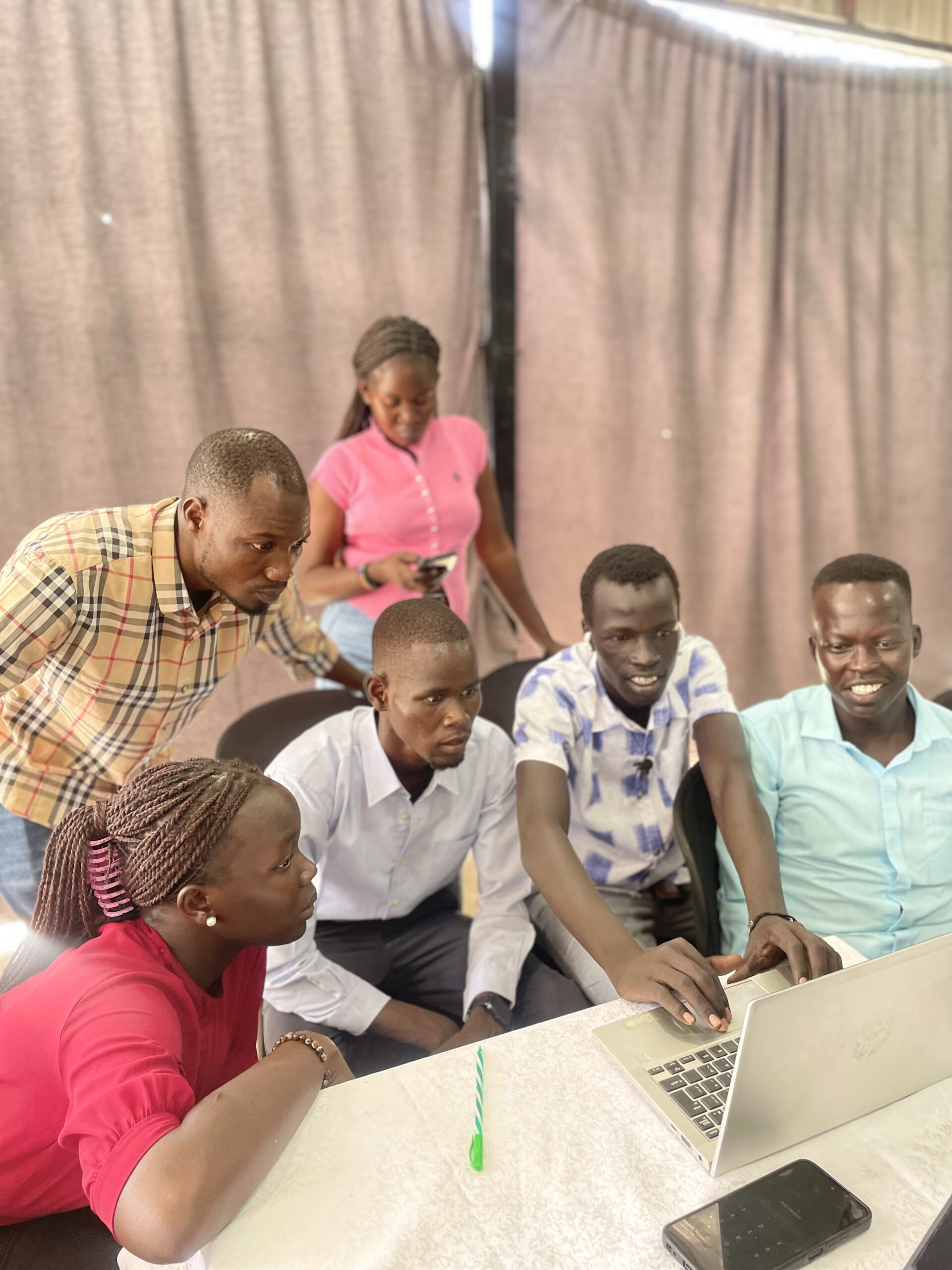
Instead of simply debunking rumors, they explain why the claim is false and provide credible information to the public.
How the Fact-Checking Process Works
Community fact-checkers typically follow a structured verification process:
- Monitoring viral content on social media platforms.
- Identifying suspicious claims, especially those involving public health, security, or ethnic tensions.
- Gathering evidence by contacting relevant institutions, eyewitnesses, or subject experts.
- Analyzing digital content, including images and videos, using verification tools.
- Publishing fact-check reports that clearly explain the claim, the verification process, and the final verdict.
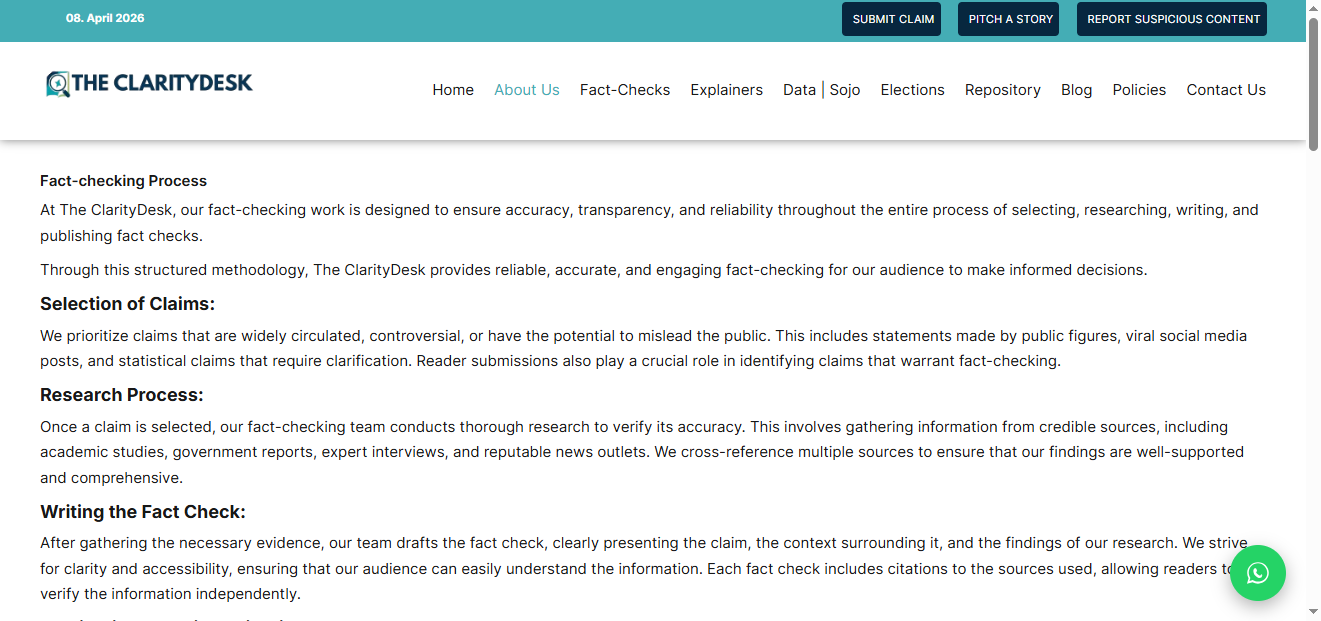
These reports are shared on social media, websites, and community networks to ensure they reach the same audiences exposed to the misinformation.
This approach is designed not only to correct false information but also to educate the public on how misinformation spreads.
Evidence of Impact
Although fact-checking initiatives in South Sudan are still developing, early results suggest they are helping slow the spread of harmful rumors.
According to an Impact Report by 211 Check, a project of Digital Rights Frontlines, fact-check reports are increasingly being shared in the same WhatsApp and Facebook groups where misinformation originates. In some cases, corrections have helped prevent local tensions from escalating.
Journalists and civil society organizations also report that public awareness of misinformation is gradually increasing, particularly among urban youth who are more active online.
Another indicator of impact is that some social media users now tag fact-checking pages directly when they encounter suspicious claims, effectively crowdsourcing the verification process.
Challenges Facing Fact-Checkers
Despite their growing influence, community fact-checkers face several obstacles.
Access to reliable data remains limited, making verification difficult in some cases. Many institutions lack clear communication channels, and some officials are hesitant to respond to inquiries from independent fact-checkers.
Funding is also a challenge. Most fact-checking initiatives rely on volunteers or short-term project funding from civil society organizations.
Additionally, misinformation often spreads faster than corrections. A viral rumor can reach thousands of people within minutes, while verification may take hours or even days.
Lessons for Strengthening Information Integrity
The rise of community fact-checking in South Sudan offers several insights for countries facing similar challenges:
- Local knowledge matters. Community-based fact-checkers often understand the cultural and political context behind rumors, helping them verify claims more effectively.
- Transparency builds trust. By explaining how information is verified, fact-checkers help audiences understand the process and build confidence in credible information.
- Partnerships are essential. Collaboration between journalists, civil society groups, digital rights organizations, and technology platforms can strengthen the overall response to misinformation.
- Digital literacy must grow alongside fact-checking. Educating the public on how to identify misleading content can reduce the spread of rumors before they go viral.
Protecting the Future of South Sudan’s Information Space
As South Sudan’s digital landscape continues to expand, the battle against misinformation will likely intensify. But the emergence of community fact-checkers demonstrates that local solutions are already taking shape.
These fact-checkers are building a more resilient information ecosystem—one verified claim at a time by combining digital tools, investigative journalism skills, and community engagement.
Their work suggests that protecting the truth online is not only the responsibility of governments or technology companies. In South Sudan, it is increasingly becoming a community effort.
This article is published by The ClarityDesk through the Young Journalists Media Integrity Fellowship, with the support of the Election Civic Tech Fund of AfricTivistes, within the AHEAD Africa and Digitalise Youth projects, led by the Digital Democracy Initiative.
Have you spotted an error in this article and would like to request a correction, or have you come across a claim that we should investigate? Please send us an email via editor@claritydesk.org or click here to WhatsApp us via +211 928 606 958.
About The ClarityDesk
The ClarityDesk is a media integrity project based in South Sudan dedicated to promoting truth, transparency, and accountability. Working at the intersection of fact-checking, solutions and data journalism, we verify claims, debunk misinformation, and equip the public with tools to critically evaluate information. Our work is guided by accuracy, independence, and the public interest.