The ClarityDesk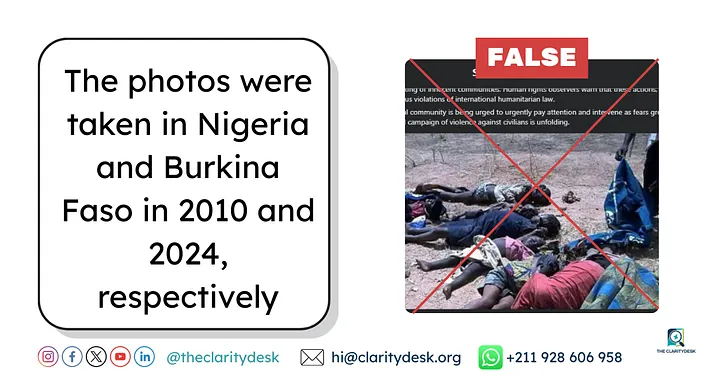

Written by Salva Aleu Wol
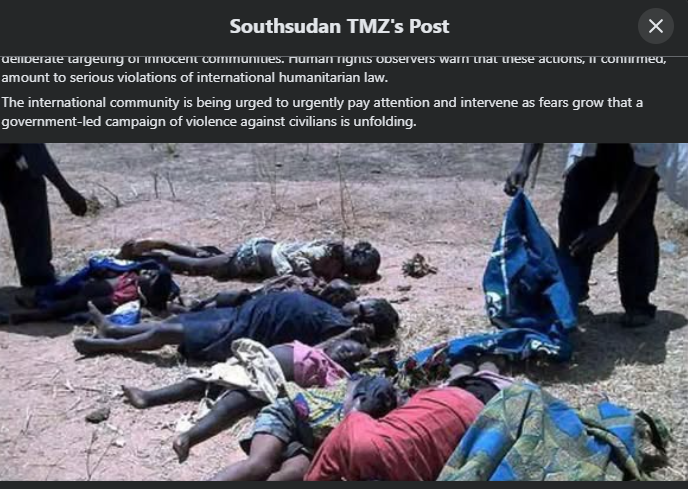
A Facebook post (archived) published by South Sudan TMZ shared graphic images of several dead bodies, claiming they showed civilians killed during alleged attacks in South Sudan’s Jonglei State, but the claim is false.
The images, which were presented as recent and directly linked to the current security situation in Jonglei State, spread on social media, drawing strong reactions and emotional responses from users.
The claim quickly gained traction by getting over 230 reactions, 160 comments and 50 shares within the shortest period.
Debunking the Claim:
Using a Google reverse image search, results for both images established that the photographs did not originate in South Sudan.
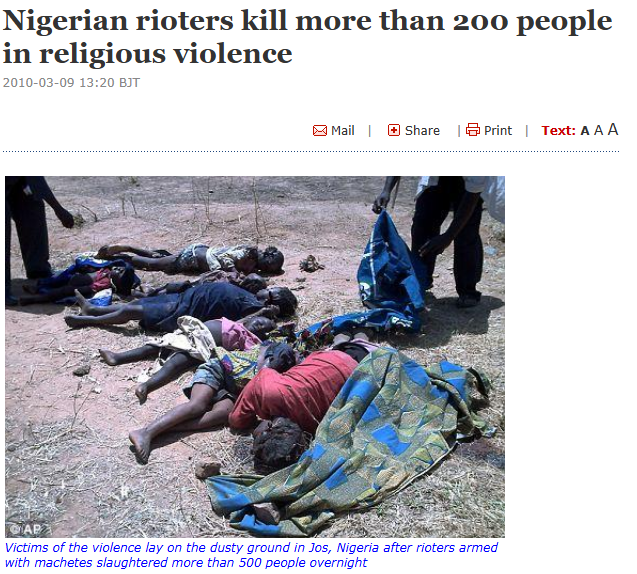
The first photograph appeared in a report published by CCTV.com (archived) in coverage of religious and communal violence in Jos, Nigeria, around 2010. It predates the current situation in South Sudan by several years. Other sources that published the same images are seen here (translated from Czech), here (Italian, not translated), and here (translated from Spanish).
Meanwhile, an article by France 24 was published in 2024 (archived)with the second image, showing that it was taken in Burkina Faso.
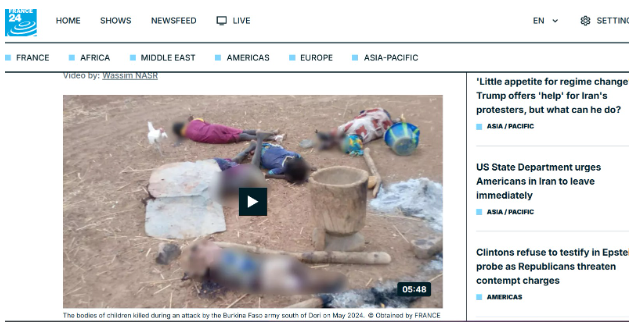
This confirms that the image is old and taken out of context and does not depict events in Jonglei State or anywhere in South Sudan.
Our Verdict:
The ClarityDesk examined the images shared on Facebook by South Sudan TMZ, purportedly showing victims of recent attacks in Jonglei State, South Sudan, and found them to be false; the images originated from Nigeria in 2010 and Burkina Faso in 2024, respectively.
Reusing unrelated images to illustrate current events is a common misinformation tactic. While clashes or insecurity may occur, attaching a foreign and outdated image to a local claim misleads the public and fuels fear, anger, and ethnic tension.
This article is published by The ClarityDesk, with the support of the Election Civic Tech Fund of AfricTivistes, within the AHEAD Africa and Digitalise Youth projects, led by the Digital Democracy Initiative.
Have you spotted an error in this article and would like to request a correction, or have you come across a claim that we should investigate? Please send us an email via editor@claritydesk.org or click here to WhatsApp us via +211 928 606 958.
About The ClarityDesk
The ClarityDesk is a media integrity project based in South Sudan dedicated to promoting truth, transparency, and accountability. Working at the intersection of fact-checking, solutions and data journalism, we verify claims, debunk misinformation, and equip the public with tools to critically evaluate information. Our work is guided by accuracy, independence, and the public interest.