The ClarityDeskJuly 8, 2026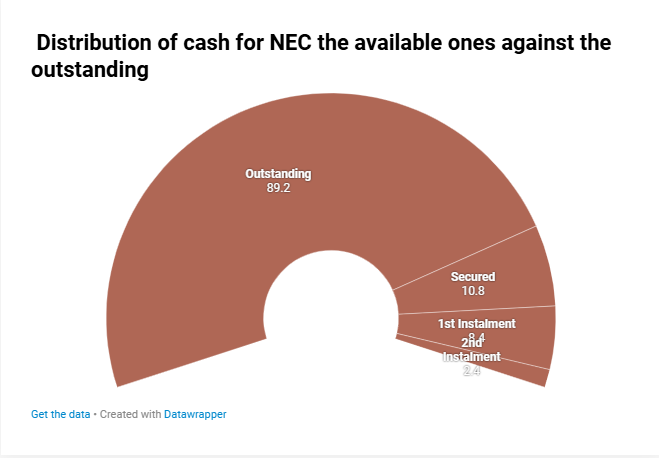

The National Elections Commission (NEC) has received only USD 27 million of its total requested US$250 million to finance preparations and conduct the scheduled December 2026 general elections in South Sudan.
According to the National Elections Commission, the overall cost of conducting the elections has been estimated at US$250 million, covering voter registration, logistics, security deployment, civic education, and election administration across the country. In other words below this is how the NEC had planned and what is given to them.
This highlights the scale of funding required to organize the country’s first national vote in its post-independence history.
The Goal ($250 Million): This is the total price tag to host the election. It covers everything from printing ballots and buying voting machines to paying poll workers and securing voting stations.
What’s Been Paid ($27 Million): The government has handed over two separate chunks of money so far ($21 million first, then another $6 million).
The Progress (10.8%): Out of every $100 needed to run this election, the organizers currently only have about $11 in their pockets.
The Funding Gap ($223 Million / 89.2%): This is the major issue. Nearly 90% of the budget is completely missing.
| Status | Amount (USD) | Percentage (%) |
| 1st Instalment | $21 million | 8.40% |
| 2nd Instalment | $6 million | 2.40% |
| Outstanding | $223 million | 89.20% |
| Total expected | $250 Million | 100% |
A table showing the total distribution of the money needed by electoral commission
https://www.datawrapper.de/_/qvte3/
Analysis
The figures show only $27 million has been released so far by the ministry of finance and planning, representing only about 10.8 percent of the NEC’s overall election budget and this was done in two separate installments. The last being in June from which NEC was able to buy new office premises among other things.
On 15 June, 2026, the NEC announced that it has received US$6 million from the government to support civic and voter education activities as preparations intensify for the country’s long-awaited general elections scheduled for December 2026.
According to the NEC, the $6 million allocated for poll preparation will be distributed to 10 states and three administrative areas.
The funding comes amid growing pressure on authorities to accelerate election preparations ahead of what is expected to be South Sudan’s first national election since gaining independence in 2011.
Elections Preparedness
The National Elections Commission has published the official election timetable, which falls on 22 December 2026, in line with legal requirements mandating that the electoral calendar be released at least six months before polling day.
The commission has already confirmed that the 2026 elections will be conducted using constituency boundaries established during the 2010 elections, following delays in conducting a new national census.
A total of 102 constituencies have been designated across South Sudan’s ten states and three administrative areas.
The December 2026 elections are widely regarded as a defining moment in South Sudan’s democratic journey. However, the funding gap underscores the country’s continued reliance on external support and the fiscal pressure on government resources amid competing national priorities.
The polls are expected to provide citizens with their first opportunity to elect national leaders through the ballot box since independence, following years of postponements and repeated extensions of the country’s transitional political arrangements.
This article is published by The ClarityDesk through the Young Journalists Media Integrity Fellowship, with support from the AHEAD Africa and Digitalise Youth projects, led by the Digital Democracy Initiative.
Have you spotted an error in this article and would like to request a correction, or have you come across a claim that we should investigate? Please send us an email via editor@claritydesk.org or click here to WhatsApp us via +211 928 606 958.
About The ClarityDesk
The ClarityDesk is a media integrity project based in South Sudan dedicated to promoting truth, transparency, and accountability. Working at the intersection of fact-checking, solutions and data journalism, we verify claims, debunk misinformation, and equip the public with tools to critically evaluate information. Our work is guided by accuracy, independence, and the public interest.