Jibi MosesJuly 13, 2025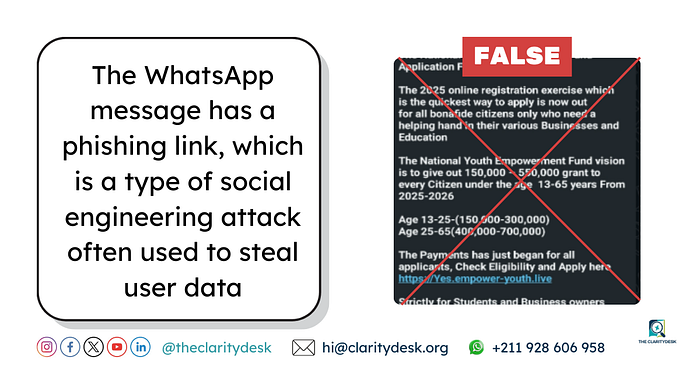
The messages making the rounds on social media, mainly on WhatsApp (archived link) and Facebook (archived link), claiming that the national youth empowerment fund is out are false.
The claim was posted by a user on ONDO KINGDOM: I AM PROUD OF MY HERITAGE, a public Facebook group with over 90,000 followers.
The post is introduced with a detailed message alerting the public to the release of the call for the empowerment fund.
Press enter or click to view image in full size
On clicking the link, which is meant for applicants to use for registration, it will direct you to a site that will advise you to click further to confirm whether you qualify for the fund or not. On clicking further, the form will request your names and the purpose as to why you are applying and your designation. When all this is done, the form will ask the applicant to share the form with 15 applicants and 5 WhatsApp groups to reclaim the said funds.
At all these stages there are the same messages from the same people claiming to be beneficiaries of the funds; however, their accounts are inactive, and there is no way of accessing them.
Press enter or click to view image in full size
Debunking the Claim:
All the above looks suspicious, and this led The ClarityDesk to investigate the fund.
The investigators at ClarityDesk ran the link through VirusTotal, a free online service that analyses suspicious files and URLs using over 70 different antivirus engines and website scanners to detect malware and malicious content. Eight out of the eighty-seven (8/87) engines flagged the link as malicious and a phishing link.
What are phishing links and malicious URLs?
Phishing is a type of social engineering attack often used to steal user data, including login credentials and credit card numbers. It occurs when an attacker, masquerading as a trusted entity, dupes a victim into opening an email, instant message, or text message. The recipient is then tricked into clicking a malicious link, which can lead to the installation of malware, the freezing of the system as part of a ransomware attack, or the revealing of sensitive information.
Press enter or click to view image in full size
In addition, using the keywords of the National Youth Empowerment Fund 2025 on Google, it returns a warning with several other previous fact-checks by other fact-checking institutions, as seen here and here.
What would look related to the fund found on the internet is called the Youth Empowerment Fund through the Global Youth Mobilisation. OPEN CALL: CYCLE 2. However, the information on this site clearly says the call for Cycle 2 opened and was open from 3 March to 24 March 2025, 23:59 CET. The application period is now closed.
Press enter or click to view image in full size
Our Verdict:
The ClarityDesk has found that a WhatsApp message with a link making the rounds claiming to offer opportunities for the youth empowerment fund is false. The message tricks people through phishing links to steal their personal information. Phishing links are mainly used by scammers and are dangerous to both individuals and institutions.
Have you spotted an error in this article and would like to request a correction, or have you come across a claim that we should investigate? Please send us an email via editor@claritydesk.org or click here to WhatsApp us.
 The ClarityDesk