 Jibi MosesJuly 13, 2025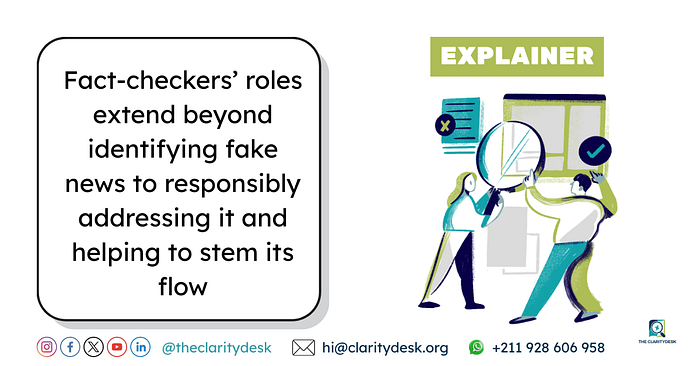
Fact-checker: Jibi Moses
The proliferation of fake news presents a significant challenge globally, and South Sudan is no exception. As a fact-checker in this dynamic environment, your role is crucial in upholding information integrity. This guide outlines a comprehensive approach to identifying, debunking, and mitigating the spread of misinformation, focusing on actionable strategies tailored for the South Sudanese context.
The Fact-checker’s core principles are critical consumption and verification
At the heart of effective fact-checking lies an unwavering commitment to critical analysis and rigorous verification. This involves more than just identifying false claims; it requires a systematic approach to evaluating information, understanding its origins, and assessing its potential impact.
Mastering Critical Consumption: Your First Line of Defence
Before any external verification, cultivate a disciplined approach to information consumption. This internal filter is your initial safeguard against falling prey to misinformation.
Think Before Acting: Never base your assessment solely on a headline. Always read the entire article, report, or social media post. Misleading headlines are a common tactic of disinformation.
Impact Assessment: Consider the potential consequences of a piece of information, especially if it’s inflammatory or divisive. Understanding its potential to incite unrest or spread panic can be an early indicator of malicious intent.
Systematic Verification of Unlikely Claims: The “Too Good/Bad/Sensational” Test: If a story evokes an extreme emotional response or seems exceptionally dramatic, it warrants immediate suspicion. Such narratives are often designed to bypass critical thinking.
Cross-Referencing: Do not rely on a single source. Actively seek out corroboration from multiple, diverse, and reputable news outlets, official government statements, and established non-governmental organisations operating in South Sudan.
Identify the Publisher: Determine who published the information. Is it a well-known, credible news organisation with a history of accurate reporting, a recognized fact-checking initiative, or an unfamiliar and potentially dubious website?
“About Us” and Mission Statements: Investigate the “About Us” or “Contact” sections of websites. Legitimate organizations are transparent about their mission, editorial policies, and team. Be wary of sites lacking this information or those with vague, politically charged, or ideologically extreme mission statements.
Reputation and Bias Assessment: Research the source’s general reputation. Is it known for impartiality, or does it have a clear political or sectarian agenda? Understanding potential biases is crucial for contextualizing the information.
Traceable Sources: Does the article or post provide specific sources for its claims (e.g., studies, official reports, direct quotes)? If so, attempt to locate and verify these original sources.
Credibility of Sources: Evaluate the credibility of the cited sources. Are they academic institutions, government bodies, expert organizations, or anonymous individuals? Be highly skeptical of anonymous sources, especially for sensational claims, or those attributed generally to “experts say” without specific attribution.
Single-Source Sensationalism: Be particularly cautious of highly sensational stories that rely on only a single source. This can be a red flag for fabricated content.
Perspective and Bias: Every piece of news carries a perspective. As a fact-checker, identify the potential biases of the author or organisation. Is the content overtly attempting to elicit a strong emotional response (fear, anger, outrage) rather than providing objective information? This is a common tactic in disinformation campaigns.
Check the Date of Publication: Old news is frequently recirculated as current events, often out of context, to manipulate public opinion or exploit current sensitivities.
Domain Name Scrutiny: Pay close attention to the URL. Look for unusual domain names or slight misspellings of legitimate news organizations (e.g., “.co” instead of “.com,” or variations that suggest a spoofed site).
Manipulative Language: Fake news often employs highly emotive, inflammatory, or hyperbolic language designed to bypass rational thought and encourage immediate sharing without critical analysis.
Leveraging Fact-Checking Tools and Techniques:
Beyond critical thinking, a fact-checker must be proficient in utilising specialised tools and techniques.
Reputable Fact-Checking Organisations: Familiarise yourself with and regularly consult established international and regional fact-checking organisations (for example, Africa Check and The ClarityDesk, etc.). These organizations have methodologies and databases that can aid your verification process.
Image and Video Verification:
Reverse Image Search (e.g., Google Images, TinEye): If an image appears suspicious, has been widely circulated, or is associated with an unlikely story, perform a reverse image search. This can reveal if the image has been used before, in what context, and whether it has been digitally manipulated.
Video Verification Tools (e.g., Amnesty International’s YouTube DataViewer, InVID WeVerify): For videos, these tools can help extract metadata, identify upload dates, and analyse frames to detect manipulation or determine original context.
Geolocation: Use distinctive landmarks or geographical features within images/videos to verify their location, especially if the claim is related to an event in a specific South Sudanese locality.
FotoForensics/Forensically: These tools can analyze images for signs of digital alteration, such as cloning, splicing, or pixel manipulation.
Responsible Engagement and Strategic Dissemination
Your role extends beyond identifying fake news to responsibly addressing it and helping to stem its flow.
Validate Before You Correct: Before engaging or issuing a correction, ensure your findings are absolutely robust and thoroughly verified. Inaccurate corrections undermine your credibility.
Educate, Don’t Accuse: When addressing individuals who have shared misinformation, adopt an empathetic and educational tone rather than an accusatory one. People often share fake news unknowingly.
Provide Concrete Evidence: Instead of merely stating “that’s fake,” provide the correct information supported by credible sources. Link directly to your fact-checks or other reputable debunking articles.
Focus on the Information, Not the Person: Frame your corrections around the inaccurate information itself, avoiding personal attacks.
Private vs. Public Correction: For friends, family, or individuals in your direct network, a polite private message can sometimes be more effective than a public confrontation, which can lead to defensiveness.
Report Misinformation to Platforms: Utilize the reporting mechanisms on social media platforms (Facebook, X/Twitter, WhatsApp) to flag misinformation. While not always immediate, consistent reporting can contribute to platforms taking action.
Clear and Concise Debunking: When publishing your fact-checks, use clear, simple language. Avoid jargon. Present the false claim, then provide the verified facts, explaining how the misinformation is misleading. Visual aids (like side-by-side comparisons) can be highly effective.
Multi-Platform Dissemination: Share your fact-checks across various platforms relevant to the South Sudanese context, including social media, local news outlets, and community radio, to maximise reach.
Advocate for Source Diversification: Encourage the public to consume news from a wide array of reputable sources, both local and international, to gain a more balanced perspective.
Address Echo Chambers: Explain the concept of “echo chambers” created by social media algorithms, where individuals are primarily exposed to information that confirms their existing beliefs. Encourage actively seeking out differing, but credible, viewpoints.
Applying these strategies meticulously assists a fact-checker in South Sudan to significantly contribute to building a more informed public, fostering critical thinking, and ultimately safeguarding the information environment from the damaging effects of fake news.